The complete explainer
The placebo effect, explained simply
The placebo effect is what happens when a person improves after receiving a treatment with no active ingredient. Nothing in the pill caused it — and yet the change is real, measurable and studied by serious research programmes around the world. This is what it is, how it works, and where the evidence runs out.
The short answer
What the placebo effect actually is
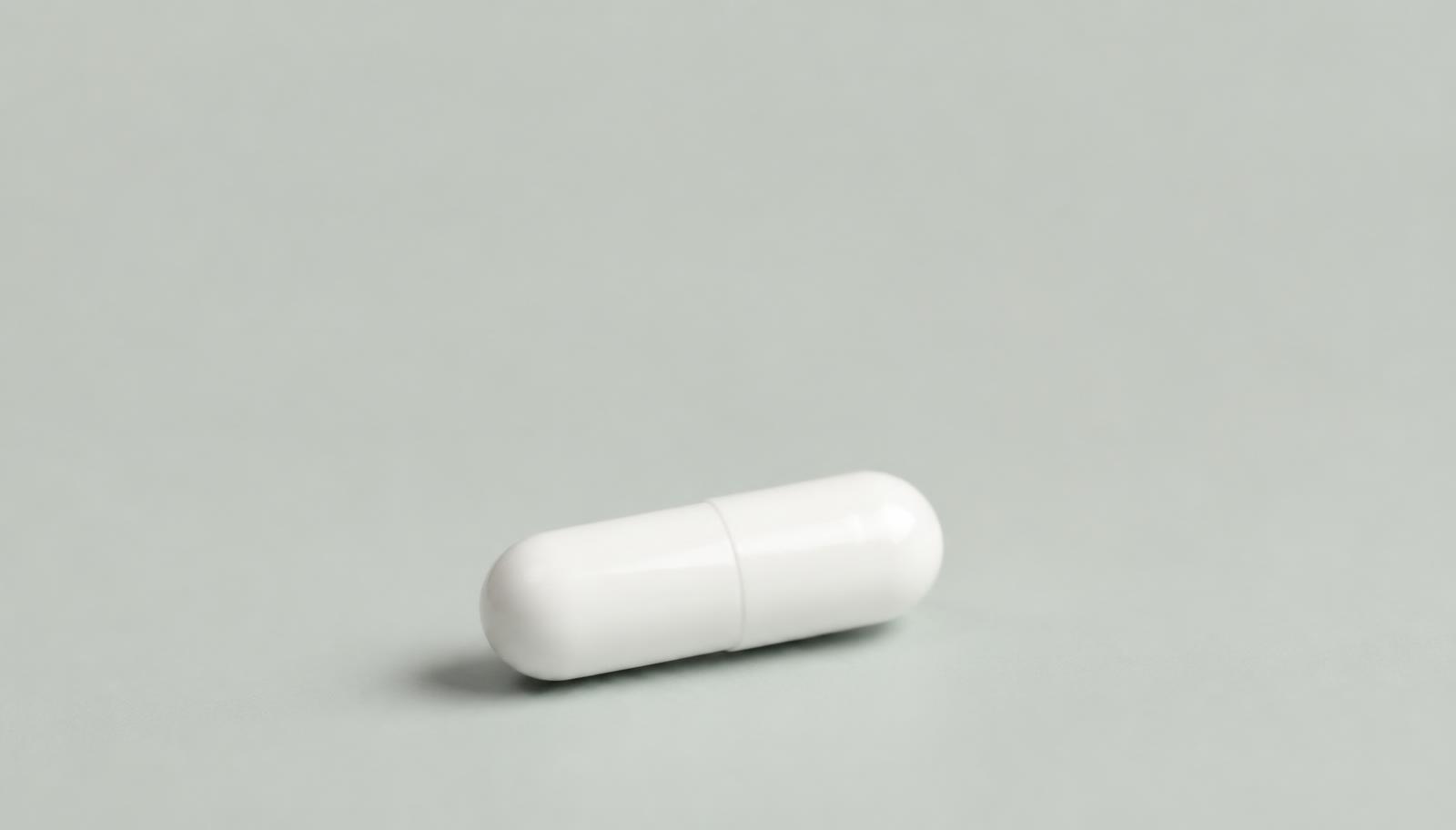
A placebo is a treatment with no active ingredient — an inert capsule, a saline injection, a sham procedure. The placebo effect is the improvement that can follow it: not because of what the treatment contains, but because of everything surrounding it. The expectation of help, the ritual of taking something, the attention of a clinician, the meaning of being treated at all.
The effect is not fake, and it is not magic. It is strongest for outcomes the brain mediates directly — pain, nausea, fatigue, anxiety — and largely absent for things expectation cannot reach, like tumours or infections. That boundary is one of the best-established findings in the field, and it is why serious researchers take the effect seriously without overstating it.
The word comes from the Latin placere, “to please” — a term once applied dismissively to sugar pills given to placate patients. Modern placebo research has turned that dismissal into a scientific question: if context alone can change outcomes, what exactly is doing the work?
The control condition
Why clinical trials are built around placebos
When a patient improves during a trial, the improvement never comes from one source. A placebo arm lets researchers subtract everything else — the passage of time, the attention, the expectation — and see what the drug itself adds. A conceptual breakdown of what any measured response contains:
- 01
Specific intervention effect
The pharmacological or mechanical action the trial is designed to isolate.
- 02
Natural history
Many conditions improve or fluctuate on their own over time.
- 03
Regression toward the mean
People enrol in studies when symptoms are worst; extreme states tend to ease.
- 04
Expectation & context
What a person anticipates, shaped by everything around the treatment.
- 05
Measurement effects
The act of being observed, monitored and asked about symptoms.
- 06
Other variables
Co-interventions, lifestyle changes and chance variation.
Conceptual illustration, not a quantitative formula. Relative contributions vary by condition, design and outcome measure. What placebo pills themselves are →
Measurement
How researchers measure the placebo effect
“Someone felt better after a sugar pill” is an anecdote, not a measurement. Isolating the placebo effect as a quantity — a number that can be compared across studies — took decades of methodological work, and the designs below are what that work produced. Each is represented in our Research Library.
Add a no-treatment arm
A pill-versus-placebo trial alone cannot measure the placebo effect, because the placebo arm improves for other reasons too — natural recovery, regression to the mean. The design that isolates the effect adds a third group that receives nothing at all: the placebo effect is what the placebo arm improves beyond the no-treatment arm. Hróbjartsson and Gøtzsche's 2001 analysis of 114 such three-arm trials remains the field's benchmark — and its most important caution.
The three-arm evidenceMeasure what patients report
Because placebo effects are strongest for subjective outcomes, the core instruments are validated patient-reported scales: symptom severity scores, pain ratings, global improvement assessments. In the landmark 2010 open-label IBS trial, the primary outcome was a standard IBS symptom severity scale — the placebo effect appeared as a statistically significant shift on that scale relative to a no-pill control, not as an impression.
The 2010 IBS trialManipulate the label, hold the pill constant
A cleaner way to measure context's contribution: give everyone the same pills and change only what the label says. In a 2014 migraine study, the same inert capsule produced different measured outcomes depending on whether it was labelled as an active drug, a placebo, or either — quantifying how much of a treatment's measured effect is carried by expectation alone.
The migraine labeling studyCompare honesty against deception
Open-label placebo designs remove deception as a variable, which makes them a measurement tool as much as a treatment: if responses persist when patients know the pills are inert, belief in an active drug cannot be the mechanism. A 2021 trial randomised IBS patients to openly honest or double-blind placebo administration and measured both against the same symptom scales — finding no significant difference between them.
The head-to-head trialThe pattern across all four: the placebo effect is not measured by giving people placebos and watching them improve. It is measured by what remains after every rival explanation — time, statistics, reporting bias, belief — has its own control condition. That discipline is what separates placebo research from placebo marketing, and it is the standard this page holds itself to.
How it works
Four proposed mechanisms
No single explanation accounts for everything the literature reports. These are the mechanisms researchers return to most often — complementary pieces of a picture still being assembled.
Expectation
The most studied account: expecting improvement engages the same neural systems involved in the anticipated experience. In pain research, placebo analgesia has been linked to the brain's own opioid systems — expectation alone, given the right context, can measurably change how pain is processed.
Classical conditioning
If your body has repeatedly paired a pill's appearance with the effect of a real drug, the pill alone can become a conditioned stimulus. Studies that first pair placebos with active medication report stronger later responses to the placebo — evidence that part of the effect is learned, not just believed.
The treatment ritual
Taking a pill is a repeated, structured act: a schedule, a bottle, a routine. Rituals carry meaning, and meaning appears to be part of the mechanism — which is why trial protocols specify administration carefully, and why open-label studies instruct participants to take their inert pills faithfully.
The clinical encounter
Attention, warmth, competence and time from a clinician are not decoration around a treatment — trial data consistently show the quality of the patient–provider interaction shapes reported outcomes independently of the pill being tested.
Open-label placebo
It can work even when you know.
The working assumption for most of medical history was that a placebo requires deception — that it only works if you believe it might be a real drug. In 2010, a trial at Harvard tested that assumption directly: patients with irritable bowel syndrome were told, in plain language, that their pills were inert placebos. They were still asked to take them faithfully. Reported symptoms improved relative to a no-pill control.
Follow-up trials in chronic low back pain and cancer-related fatigue reported similar patterns, and a 2021 trial compared open-label and concealed placebos head to head — finding no significant difference between them. A meta-analysis of the field reports a positive overall effect alongside serious caveats: small samples, subjective outcomes, a young literature.
The honest summary: deception does not appear to be the operative ingredient. Ritual, expectation and context do work that belief alone was assumed to do. This is the research tradition Efficacy Labs’ products are designed around — placebos honest about what they contain.
The mirror image
The nocebo effect
Expectation cuts both ways. The nocebo effect — from the Latin nocere, “to harm” — is what happens when negative expectation produces negative outcomes. Warn people a pill might cause headaches, and some will report headaches, even when the pill is inert.
Nocebo responses explain a meaningful share of the side effects reported in the placebo arms of drug trials — symptoms caused not by any drug, but by the informed-consent form. Researchers argue that how risk information is framed is itself a clinical variable, and that the same machinery driving placebo responses drives nocebo responses in reverse.
Understanding nocebo is part of understanding placebo: both show that the context of treatment is not neutral. It is an active ingredient in every medical encounter.
The skeptical view
Where the evidence runs out
Any honest account of the placebo effect has to include the strongest case against overstating it. In 2001, Hróbjartsson and Gøtzsche pooled 114 trials that included both a placebo arm and a genuine no-treatment arm — the design needed to separate a real placebo effect from natural recovery and regression to the mean.
Their finding: little evidence of clinically important placebo effects for binary or objective outcomes, with a modest effect confined to continuous subjective outcomes — above all, pain. Much of what circulates publicly about “the power of the placebo” does not survive contact with that analysis.
The two literatures — open-label promise and methodological caution — are not in contradiction. They define the boundary: placebo responses are real, bounded, and strongest where the nervous system mediates the outcome. We present both, because a placebo company that oversells the science is just another supplement brand.
Common misconceptions
What the placebo effect is not
- “The placebo effect means the illness wasn't real.”
- No. Placebo responses are changes in experience and reporting — they don't imply the original symptoms were imagined. Pain is real whether its source is tissue damage or expectation, and a placebo response doesn't retroactively invalidate the symptom.
- “Placebos work on everything.”
- The strongest evidence is for subjective, self-reported outcomes — pain, nausea, fatigue, mood. For objective outcomes like tumour size, viral load or bone healing, the best analyses find little to no placebo effect. This distinction is the core of the skeptical literature.
- “Deception is required.”
- Open-label placebo trials exist specifically to test this. Several report responses even when participants know the pills are inert — suggesting ritual and context, not just belief in an active drug, do part of the work.
- “A placebo response means the drug failed.”
- Trials don't compare drug to nothing — they compare drug to placebo plus everything else. A strong placebo-arm response raises the bar a drug must clear, but it doesn't mean the drug does nothing; it means context does something too.
The primary literature
The studies behind this page
Every claim above traces to independent, peer-reviewed research — none of it conducted with Efficacy Labs products, and citation here is descriptive, not endorsement. These are the four studies to start with; the full library has detailed breakdowns of each.
- Randomized controlled trial · PLoS ONE, 2010Open-label placebo in IBS (2010)The trial that started modern open-label placebo research: patients were openly told their pills were inert placebos, and were still assessed against a no-treatment control.Read the breakdown
- Randomized controlled trial · Pain, 2021Open-label vs double-blind placebo in IBS (2021)The comparison the earlier trials were missing: open-label placebo tested directly against concealed double-blind placebo and against no pill.Read the breakdown
- Meta-analysis · Scientific Reports, 2021Open-label placebo meta-analysis (2021)A pooled analysis of open-label placebo trials across conditions, reporting a positive overall effect alongside significant caveats about study quality.Read the breakdown
- Meta-analysis · The New England Journal of Medicine, 2001Is the placebo powerless? (2001)The influential skeptical analysis: pooling trials with both placebo and no-treatment arms found little evidence of clinically important placebo effects outside subjective outcomes such as pain.Read the breakdown
Questions
Frequently asked questions
- What is the placebo effect, in simple terms?
- The placebo effect is what happens when someone improves after receiving a treatment with no active ingredient. The pill does nothing chemically — the change comes from context: expectation, ritual, attention, and the meaning of being treated. Researchers study it as a real, measurable phenomenon, not as trickery or imagination.
- Is the placebo effect real or just in people's heads?
- Both, in a sense — 'in your head' is where expectation and conditioning live, and those produce measurable changes. Brain-imaging studies have observed changes in pain-processing regions during placebo responses. But effects are strongest for subjective outcomes like pain and fatigue, and much weaker or absent for objective measures like tumour size or infection.
- Why do clinical trials use placebos?
- A placebo control lets researchers separate a drug's pharmacological effect from everything else that happens when someone takes a pill: expectation, the ritual of treatment, natural recovery, and statistical variation. Without it, there is no way to know whether an improvement came from the drug or the context around it.
- How do researchers measure the placebo effect?
- The rigorous design uses three groups: the drug, a placebo, and no treatment at all. The placebo effect is how much the placebo group improves beyond the no-treatment group — which subtracts natural recovery and statistical noise. Outcomes are measured on validated symptom scales, and open-label trials test whether the effect survives honesty about the pills being inert.
- What is an open-label placebo?
- An open-label placebo is a placebo given honestly — the person taking it is told explicitly that it contains no active ingredient. Since a landmark 2010 trial in irritable bowel syndrome, researchers have studied whether placebo responses occur even without deception, and several trials report that they can. Efficacy Labs' Pure Placebo is designed around this transparent, no-deception concept.
- What is the nocebo effect?
- The nocebo effect is the placebo effect's mirror image: negative expectation producing negative outcomes. People warned about side effects report them more often, even on inert pills. A meaningful share of side effects reported in placebo arms of drug trials is attributed to nocebo responses.
- Does the placebo effect work if you know it's a placebo?
- That is exactly what open-label placebo research asks. Trials in conditions including IBS, chronic low back pain and cancer-related fatigue have reported improvements even when participants knew the pills were inert — though the evidence base is young, samples are small, and researchers caution against overstating it.
- What are the limits of the placebo effect?
- The influential skeptical analyses — notably Hróbjartsson and Gøtzsche's 2001 review of 114 trials — found little evidence of clinically important placebo effects beyond subjective, continuous outcomes such as pain. Placebos do not shrink tumours or cure infections. Responsible interpretation means taking the effect seriously without treating it as unlimited.
Curious enough to hold one?
Efficacy Labs makes inert, honestly labelled placebo capsules — no active ingredient, no health claims, no deception. Just the most interesting object in medical research, in a bottle.
Explore Placebo Pills